
The Gate
A Historical Documentary Novel

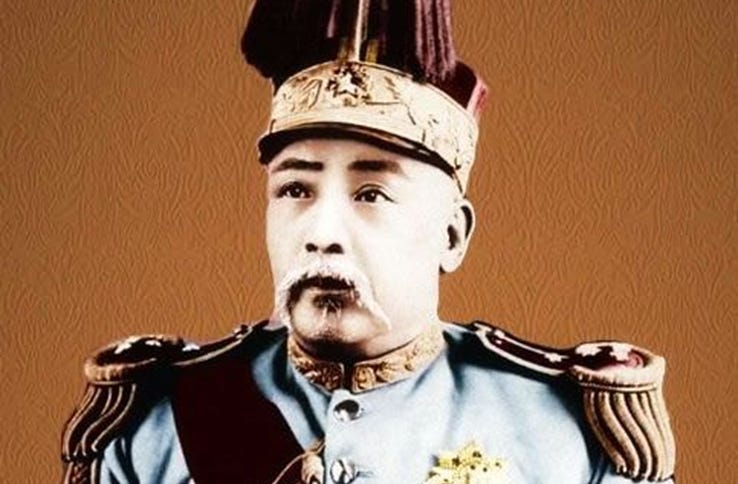
By Pan Ziyi (潘子义)
In the autumn of the twenty-seventh year of the Guangxu reign, the wind had already turned cold.
On the official road from Shandong back to Xiangcheng in Henan, there were white mourning banners all the way, and yellow earth all the way. From dozens of li away, one could already make out the funeral procession. At the front were yamen runners clearing the road. Behind them came men carrying the imperial edict written on yellow silk. Whenever the wind rose, the corners of the silk rattled and fluttered. In the middle was a great nanmu coffin, heavy as a piece of mountain. Several hundred bearers took turns changing shoulders, their flesh swollen red and shining from the weight. Farther back marched rank after rank of fully armed Beiyang soldiers, the butts of their rifles striking their leather boots, each sound landing with a dull beat, as if knocking against the heart.
Common people stood by the roadside watching. Some craned their necks. Some hunched their shoulders. Others said in low voices that Yuan Shikai (袁世凯) had truly spent lavishly: sending off his old mother with a display fit for a governor-general inspecting the frontier. Still others said this was not a funeral at all. This was a return to Xiangcheng to fight for a breath of dignity.
That was not wrong. That year, the Governor’s Office in Shandong issued a notice of mourning: Yuan Shikai’s birth mother, Madam Liu (刘氏), had died of illness. Yuan ordered all officials under his administration to go into mourning, and he drew three thousand fully armed soldiers from the New Army to escort the coffin back to the family’s home in Xiangcheng, Henan, for burial. Along the route, prefectural and county officials put up mourning sheds in advance and arranged roadside offerings. On both sides of the road stretched a white haze, which from afar looked like frost fallen over the ground. The court, too, gave the matter due face. Empress Dowager Cixi (慈禧太后) issued an edict posthumously conferring on Madam Liu the title of “First-Rank Lady of Imperial Appointment.”
That edict glittered with gold, its paper shining. It looked like a knife, and it looked like a shield. Sitting in his carriage, Yuan Shikai’s face was dark. Over these years, his office had grown ever higher, the troops in his hand ever more numerous, and his word ever more decisive. Yet this time he felt no joy at all. Once a man reaches such a point, the louder the bustle outside, the emptier it grows within. His mother was dead. No matter how grand the display, it could not cover over that one hollow fact. More than that, he knew that this journey home was not only a funeral procession. He had to force his way through a gate. It was no ordinary household gate. It was the main gate of the Yuan family ancestral cemetery in Xiangcheng.
The carriage wheels ground over the road with a creaking sound. Gusts of wind kept slipping through the curtains. Yuan Shikai closed his eyes, yet in his ears old sounds from childhood would not stop returning: the splash of women washing clothes, chickens crying in the yard, his father coughing, the voices of clan elders deliberately lowered and yet every word cutting to the bone. Those sounds had been buried for decades. They had seemed dead. But today, one by one, they came back to life.
Madam Liu had originally been a maid in the Yuan household. Later she had been taken in as a concubine. Under Qing law and ritual, a concubine was not a wife. In the family order, her standing was very low. In life she could not outrank the principal wife; in death she could not pass into the principal burial space. On the face of it, this was only a question of status. Yet in this world, many people’s very bones were bent under the weight of those two words. Madam Liu understood this while she was alive. Her son Yuan Shikai understood it even more clearly.
The Yuan family of Xiangcheng was a great clan. And the larger the clan, the larger its rules. After Yuan’s father, Yuan Baozhong (袁保中), died, the most authoritative voice in the family was the eldest legitimate son, Yuan Shidun (袁世敦). He had read a fair amount of books, and there was always a slight chill on his face. When he said nothing, he was like a wall. When he spoke, he was like a ruler. The ruler was not long, but it always measured the places where one hurt most.
When Yuan Shikai was young, he always felt a little uneasy in front of this elder brother. It was not that he feared being beaten. He feared that look. It was faint, like well water, but cold seeped up from beneath it. Yuan Shidun never scolded him, and hardly paid him any mind. Yet at New Year, on feast days, and during ancestral rites, he would deliberately explain the rules with particular precision. Who stood where. Who knelt for how long. Who could enter the gate. Who should step back. There was no fire in his words, but they struck harder than a slap.
The young Yuan Shikai did not submit. He was never one to submit. Big-headed, bright-eyed, and quick-hearted, he was alive in every part of himself. Others heard the rules and lowered their heads. In his heart, though, he was always asking: why? Why, if they were born of the same father, should the threshold still be divided into high and low? Why were some people born able to walk through the front gate, while others had to circle through the side gate for life? He could not swallow that anger as a child, and later he never forgot it. Only when a man is poor and weak, however hard his anger, he can do nothing but hide it between his teeth.
Now things were different. The Yuan Shikai of today was no longer that minor son standing in the corner of the yard, enduring cold stares. Step by step, he had climbed from a junior military officer to a powerful provincial authority. He had troops in hand, connections at court, an imperial edict in his possession, and fame throughout the realm. Still, he knew very well that however high he had climbed, however much the outside world feared him, respected him, and flattered him, the gate of the Yuan ancestral cemetery might not truly open for him.
Xiangcheng drew nearer and nearer. Before the funeral procession entered the city, the sky darkened. The earthen road outside town had been soaked sticky by autumn rains in the days before. When the horses’ hooves sank into it and came out again, they drew strings of mud behind them. More and more people gathered outside the city to watch. Some recognized the governor’s retinue and knelt early by the roadside. Others lowered their voices and said that there would be a good show today. Master Yuan of the clan was no easy man, and Governor Yuan had not come back to accept his fate. The words floated on the wind and drifted into every ear.
The ancestral cemetery lay outside the city, enclosed by a high wall. Before its main gate stretched a broad spirit road. That day both sides of the road were crowded with people. The Beiyang soldiers cleared a path, their bayonets flashing white. The coffin bearers heaved so hard that their chests rose and fell. Sweat and mud had mixed together on their bodies. Those carrying the coffin dared not lift their heads. They knew only that the gate before them was shut tight, like a face with its mouth closed.
On the steps before the gate stood Yuan Shidun. He was not wearing mourning clothes. He wore a striking red robe and stood bolt upright, both hands clasped behind his back. Behind him stood several clan elders. In the middle of that sea of white mourning banners, the patch of red looked like a ball of fire. But it was not a warm fire. It was a cold one, lit for the sole purpose of blocking the road.
Under patrilineal ritual law, the descendants of a principal wife had no obligation to wear mourning for a concubine elder. Yuan Shidun’s red robe made one thing plain to all: Madam Liu’s death did not count, in the Yuan family, as a proper mourning. The red was harsher than a thousand words. It was like a slap across the face of the dead, and across Yuan Shikai’s face as well.
Yuan Shikai stepped down from the carriage. He wore full mourning, yet around his waist there still hung that hard edge he had forged in official life. He strode to the foot of the steps, looked first at the closed gate, then at his elder brother standing before it, and only then spoke. “Elder Brother, my mother’s edict of ennoblement is here. Please open the main gate and receive her into the ancestral cemetery, so that she may be buried together with Father.”
He did not speak loudly, yet each word pressed its way up the steps. Yuan Shidun glanced at him. His expression did not move. He only raised a hand and pointed at the gate behind him. In a cold voice he said, “The Yuan family rules are clear. A concubine does not enter the principal burial chamber and does not pass through the main gate.”
The wind blew down the spirit road, and the paper banners rustled loudly. None of the soldiers or officials below the steps dared make a sound. Everyone knew that this clash was no mere quarrel between brothers. One man was a high official of the imperial court. The other was the keeper of the clan’s lawful order. Neither would yield. Neither could yield lightly.
Yuan Shikai lifted the yellow silk edict in his hand. The silk trembled in the wind like a yellow snake. “The Empress Dowager has conferred on my mother the title of a First-Rank Lady,” he said. “She is now a titled woman of the court.”
Standing on the steps, Yuan Shidun did not retreat an inch. “The court’s edicts govern the law of the state,” he said. “The Yuan clan of Xiangcheng keeps the rules of the family. So long as the Yuan family still has a clan head, a concubine is a concubine. Even if she is the birth mother of a provincial governor, there is no reason for her to enter by the main gate and lie in the principal burial space.”
The words were too hard. The faces of several Beiyang commanders below the steps changed at once, and their hands moved of their own accord toward the pistols at their waists. One had already drawn his gun halfway. The muzzle tilted and pointed straight at the steps. Seeing the officers stir, the soldiers tightened too. In that instant, the air itself seemed to split open, like the sky before thunder.
If anyone had taken one step further, blood might truly have been spilled before the ancestral cemetery that day. Yuan Shikai suddenly turned and roared, “Put the guns away! Whoever dares touch the eldest master will be executed on the spot!”
The shout was so loud that it stunned the soldiers below. The men who had drawn their weapons hurried to shove them back into their holsters. Quiet fell again on the spirit road. Only the wind moved the white banners, making a low, moaning sound, as if someone were weeping.
Standing at the foot of the steps, the flesh in Yuan Shikai’s face trembled slightly. He knew the guns could not sound. If they did, then today would not be a struggle over burial. It would be a violation of family law, a rebellion against the clan, an assault on one’s legitimate elder brother in front of the ancestors themselves. No matter how great his office, he could not withstand the charge of being “unfilial.” The Qing ruled the realm through filial morality. Once that stain attached itself to his name, those in the capital who had been watching him would seize on it and strike him hard.
At this point, power suddenly seemed to have crashed into an invisible wall. It was not a wall of bricks. It was a wall built of ritual, built of clan law, built layer upon layer by centuries of family rules. Yuan Shikai had troops, seals of office, and an imperial edict in hand, yet for the moment he could not cross that old wall.
Everyone thought he would force his way through. Yet in the next instant, Yuan Shikai’s knees gave way, and with a thud he knelt in the mud. Muddy water splashed onto his mourning garments and onto his knees. He bowed his head. His voice was pressed very low, but it was low in a way that made the heart ache. “Elder Brother, I, Yuan Weiting (袁慰亭), have spent these years outside serving the country and laboring for the court. In the end I ask only one thing: let my old mother be laid to rest in peace. I beg Elder Brother to make an allowance and leave her some measure of dignity.”
A provincial governor who commanded heavy troops, kneeling at the feet of his legitimate elder brother—there was something uncanny in the sight. The onlookers held their breath. Even the wind seemed to stop for a moment. Yuan Shidun looked down at the younger brother kneeling in the mud, yet there was no softening in his eyes. His voice was still cold. “The rules cannot be broken. Either the coffin is carried in through the side gate and buried in a side plot, or you must find another place.”
Once those words fell, only two roads remained. Either yield. Or rebury elsewhere. Yuan Shikai knelt on the ground for a long time without moving. Muddy water dripped from the hem of his robe. Slowly he raised his head, looked once at his elder brother on the steps, and then at the tightly shut main gate. The gate was tall. Its bronze studs had gone black. Not a thread of light showed through the crack. In that instant, he seemed suddenly to understand something.
All these years he had thought that by climbing higher and higher, he had already turned many old accounts behind him. Yet only now did he realize that some old accounts do not disappear just because one’s office grows great. So long as a man still lives inside this order of clan law and ritual, a secondary son remains a secondary son, and the son of a concubine remains the son of a concubine. The authority the court had given him could let him slap a table in the provincial capital, could make prefectural and county officials kneel as they spoke, yet it could not change the fact of his own birth.
What truly barred his way, then, was not only that gate. It was the identity he had spent his whole life trying to cross beyond. He stood up, brushed the mud from his knees, and his face, if anything, grew calmer. He stared at the gate for a while, then turned and said to the coffin bearers, “Turn the bier.”
The bearers froze for a moment, then quickly answered. The great nanmu coffin slowly turned in place, its back now facing the Yuan ancestral cemetery as it was carried away. On the spirit road the white mourning banners bent one after another like grass pressed low by the wind. Yuan Shidun still stood on the steps, straight and unmoving. He looked like the victor, yet there was no joy on his face either. For he knew that what he had blocked this time was not only one man. He had blocked the headlong collision of an age trying to break through the gate.
The moment Yuan Shikai left the ancestral cemetery, he sent men with a large sum of silver to acquire land at Honggongzui (洪公嘴), more than ten li outside Xiangcheng. It had been wasteland, where the autumn grass grew half a man high. When the wind blew, the edges of the blades looked like rows of little knives. The Beiyang soldiers laid down their rifles and took up shovels and hoes, serving directly as laborers. Three thousand men worked without rest day and night, leveling the ground, digging the grave, raising the mound, building the walls, planting pines. Dust flew in the daytime. At night, torches ran together in unbroken lines. From far away it looked like a military camp had risen in the wilderness, or as if a whole new mountain of graves had suddenly grown there.
Some said that Governor Yuan was building an ancestral tomb with the same energy he used to drill troops. Others said he was setting up a new hearth and sulking against his ancestors. There was sulking in it, yes. But it was more than sulking.
At night, the wind beat against the tents until they snapped and flapped. Yuan Shikai stood beside the newly made burial ground, facing heaps of freshly turned yellow earth. Madam Liu’s coffin still rested nearby. The incense fire brightened and dimmed, and its smoke rose straight upward. Those keeping vigil hunched their shoulders as they burned paper offerings. The firelight cast a yellow pall over every face.
Yuan Shikai stood motionless, like a wooden stake driven into the earth. A personal guard softly urged him to return to the tent and rest. He waved him off. After a long time, he finally said, “While my mother was alive, no one knew how many cold stares she endured. Now that she is dead, she still had to suffer this once more outside the gate.”
The guard did not dare answer. He only lowered his head further. Yuan Shikai went on, “In a man’s life, even when his office reaches the top, there are still things he cannot decide for himself.” The words seemed meant for others, but they also seemed meant for himself.
Early the next morning, just as the sky was beginning to lighten, a thin mist rose over Honggongzui. The new grave had already taken shape. The earth was fresh yellow and heavy with moisture. The pines had been transplanted overnight. They were small, but standing row upon row, they had begun to look like something. The funeral procession turned in a new direction and the bier was raised once more. The sound of weeping spread over the wasteland. It was emptier there than before the Yuan ancestral cemetery, and it carried farther.
In the end, Madam Liu was buried at Honggongzui. She did not enter the Yuan family’s principal burial space, nor did she pass through the main gate. The story spread far and wide afterward. Some mocked Yuan Shikai. They said that no matter how great the official, at home he was still an unqualified secondary son. Others sighed and said that the Yuan family’s eldest legitimate brother was truly ruthless: dressed in red, blocking the gate, not giving an inch, and forcing a provincial governor to halt outside the ancestral tombs. Yet if one looks deeper, no one in this matter was simple.
Yuan Shidun was defending family law. He was not only making things difficult for his younger brother. He was using his whole body to hold fast to the last shreds of dignity in an old order. Because he knew that once Madam Liu, under the title of “Lady of Imperial Appointment,” was carried through the main gate, the hardest line in the genealogy would break. Concubine and wife, secondary and legitimate, family law and state law—the walls between them would open a breach. Yield one step today, and who could say how far one would have to yield tomorrow.
And what Yuan Shikai fought for was not only his mother’s funeral. What he fought for was whether half a lifetime of climbing upward by sheer force could finally buy him one single word: legitimacy. He wanted to use the authority of the court to batter open the gate of the family and erase the old mark of his birth. Yet in the end he discovered that the hardest things are often not in front of a gun barrel, nor in the world of officialdom, but in those invisible rules, untouchable and unseen, written down generation after generation in genealogies and ritual law.
The affair was like a needle. It drew no blood, but it pierced very deep. Many years later, Yuan Shikai rose still higher. He became a Grand Councilor, then Premier of the Cabinet, and later even sat in the seat of President. Later still, he even reached for the dragon robe of an emperor. On the surface, this man had smashed through every gate. Yet when one stretches out the line of time, that kneeling in front of the Xiangcheng ancestral cemetery in 1901 seems like a shadow that followed him all his life.
The one kneeling in the mud that day was not only a son burying his mother. He was also a man who had suddenly seen the ceiling above his own life. In an old system, people often think power is the greatest thing. But that is not always so. Very often, power can govern the living, while ritual governs the living heart. Power can open a city gate, but it may not open the ancestral gate. Power can make people kneel before you, but it may not make them acknowledge you. And what hurt Yuan Shikai most that day was not only that his elder brother would not relent. It was that he suddenly understood that all those years of desperate climbing had not truly broken the chain of status that bound him.
So long as he remained inside that old order of clan law and ritual, no matter how great the office he attained, he would always still be that secondary son with no right to pass through the main gate. The wind at Honggongzui blew on year after year. And the gate of the Yuan ancestral cemetery stayed shut year after year. Earth dries. Grass grows. Graves grow old. People die. But some gates, once they have been closed to a man, remain closed in his heart for life.
Later, some said that the first thing Yuan Shikai learned in life was how to use new power against the old order. Others said that the one thing he could never truly subdue was that same old order. Put side by side, both statements seem true.
For the fiercest ambition in a person often does not grow from height. It grows from humiliation. And in the autumn of 1901, that unopened main gate before the Xiangcheng ancestral cemetery was the loudest echo of that humiliation.
(This novel is adapted from a story written by “La Bubu zhi Ge” [“拉布布之歌”]. Special thanks are hereby offered.)