
Laying Out the Dead
《殓尸》

That year, winter came early in Liuyang (浏阳). The grass on the hills had not yet lost all its color, but the north wind was already pouring down the valley, sweeping the narrow road at the village entrance until it turned a dusty gray.
Tan Jixun (谭继洵) sat in the study behind the ancestral hall. The wind slipped through the gaps between the roof tiles and made a faint sound. He was seventy-two. His beard had turned completely white. His fingers still had strength when they held a brush, yet when he wrote he often had to stop to catch his breath. In recent years he had stepped down from his post as governor of Hubei (湖北巡抚) and returned home to spend his old age. His days were quiet and cautious.
That day’s quiet was torn open by a letter from the north.
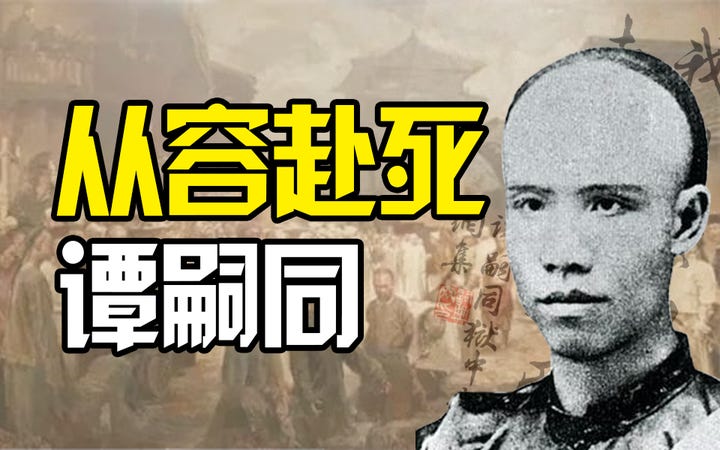
The moment he pulled open the seal, his hand began to shake. There were few words on the page and the sentences were short, but each character seemed sunk deep into the paper, as if soaked in cold water. The letter said that after the Wuxu Coup and the failure of the Hundred Days’ Reform, the court had branded Tan Sitong (谭嗣同) and five others “rebels” and beheaded them at Caishikou. Their bodies were left exposed. Friends and family were forbidden to collect the remains. Anyone who tried would be punished as an accomplice.
Just before, the only sound in the study had been the wind. After he finished reading, only his breathing filled the room. His breath suddenly grew fast and heavy, as if a stubborn lump of air had lodged in his chest and could neither go up nor sink down.
He put the letter on the table, stood up and sat down again, over and over, until at last he shut the door and locked himself inside. That night, the others in the house heard only a low sobbing through the crack under the door. It went on until dawn.
I
When Tan Jixun was young, he entered officialdom one stroke of the brush at a time. He passed the provincial examination, served as a county magistrate, managed waterworks, investigated the salt trade. He moved up step by step. In more than thirty years as an official, he never had a major scandal.
He was cautious in office and most afraid of the two characters “losing one’s footing.” When he built waterworks, he often filled budget gaps from his own purse. When he cleaned up the salt trade, he turned away all gifts that came to his door. Others called him steady and prudent. He said he was only “timid and afraid to overstep.”
That timidity and caution had taken deep root in him, but none of it had passed on to his son.
At fifteen, Tan Sitong dared to travel alone with a few books and some silver, roaming through Hunan and Hubei, then down to Jiangnan. While other boys were reciting The Four Books and The Five Classics in village schools, he was on boats reading books brought by foreign missionaries and listening to talk of new Western enterprises.
When the father returned home on leave, he often found his son in the main hall arguing with young men from the same district until faces flushed and necks stiffened.
The young men talked about “reform,” “national survival,” and “enlightening the people.” The old father talked about “passing the examinations for office” and “keeping one’s place.”
In the end, every quarrel narrowed down to one sentence from the father:
“If other people hear you talk like this, it will cost you your head.”
Tan Sitong laughed brightly and said, “If it costs a head, then so be it. Someone has to say these things first.”
At that time, neither generation yet knew that these words would one day come true.
II
In the twenty-second year of the Guangxu Emperor, Tan Sitong resigned from his post as prefect in Jiangsu and went to Beijing “to take part in the Reform.”
Before he left, his father called him into the main hall. Outside, late-summer rain was falling. The drops beat on the eaves like a string of broken drumbeats.
Tan Jixun held his son’s hand. The veins on the back of his hand were standing out like cords. He spoke very slowly: “Out there, speak less and do more. All that is asked at home is peace and safety.”
After listening, Tan Sitong was silent for a while. Then he answered with one line: “You guard the peace of one household. What I want is peace under Heaven.”
The words were like an invisible knife, cutting open the calm air between father and son.
In the years that followed, the father stayed in Hubei, the son in the capital. There were not many letters between them. At court, clouds and storms gathered and broke. In the southern countryside, the seasons cycled as always. This lasted until the autumn of the Wuxu year, when the letter from the north shattered the calm.
III
At first light the next morning, as the sky was just turning gray, Tan Jixun came out of the study.
He put all the silver the family had saved over many years into a cloth bag and asked for a mule cart to be made ready. The family thought he was going to the provincial capital to visit old friends. He only said one line: “I am going north.” His voice was hoarse from the night of weeping.
From Liuyang (浏阳) to Beijing was a journey of a thousand li. When the mule cart went out of the village, the bamboo groves along the road rustled in the autumn wind, as if they were whispering.
Heading north, there were more and more checkpoints. Soldiers stopped the cart to search it and asked where he was going and why. He had folded away his old official’s robe from Hubei so cleanly that not a scrap showed. He wore only a padded jacket patched here and there. He said he was an old man from the countryside, going north to seek relatives.
Some guards eyed his hands, blackened by ink and thinned by years of work, and suspected he was not a farmer. He bent his back, hoisted his luggage from the cart himself, and made sure they saw how stooped he was.
The farther north he went, the harder the wind blew. By day he gnawed on dry rations. At night he slept on dry grass under the cart. In less than a month he had grown thin, and the straight back he once had began to bend.
The closest call came in Hebei.
Soldiers again stopped the cart and demanded to open the boxes. All along the way, Tan Jixun had kept one empty coffin on the cart. He meant to place his son’s remains in it in the capital and carry them home. The guards knocked on the coffin and said such things could hide contraband and would be confiscated.
Tan Jixun dropped to his knees in the yellow dirt by the road, clutching the coffin with both arms. Tears ran down his face as he said, “I only want my son’s soul to return home. This coffin is for him.”
The soldiers saw his age and found nothing else on him. In the end, they waved him through.
When he knelt, his knees drove deep into the soil. When he rose, the legs of his trousers were caked with mud. In the days that followed, he could no longer straighten his back as he walked.
IV
By the time he reached Beijing, the wind at Caishikou had grown very cold.
Tan Sitong and the other five “gentlemen of 1898” had been executed three days before. Their bodies had been thrown by a mass grave. Only a few old friends of the Reform lingered at a distance. None dared go near. The court’s order was strict: anyone who collected the corpses would be punished as one of the same party.
When Tan Jixun arrived, the sky had already turned dark.
He stood by the mass pit. The north wind whipped his padded jacket until it snapped. Blood and gray earth stained the ground. It was hard to tell which part belonged to whom. His vision had grown dim with age, yet he picked out his son’s remains at a glance—the son he had watched grow up, whose essays he had corrected, whom he had scolded and cherished.
Someone tried to dissuade him. “Elder Sir, if you claim this son, you will drag the whole family into this.”
He only shook his head. “He is a child of the Tan clan. Dead or alive, he must come home.”
His voice was not loud, but it cut through all the wind around them.
He did not break down in wailing. He only reached out to wipe the blood from his son’s body, clearing the dust from each wound. When his fingertips brushed the cold, stiff bone, his hand trembled even more than the bone.
Then he dressed his son in clean robes and laid the body gently in the coffin he had brought. Every movement was precise, like the way he had signed official documents when he was young.
In the city that day, people still went out to buy vegetables, listen to opera in the teahouse, burn incense at temples. Only on that patch of rough ground, an old man with white hair bent his back and again and again reached his hands into blood and mud.
V
The journey south with the coffin was longer than the journey north.
The mule cart rolled along the official road. The wheels ground into the yellow earth with a creak. When people by the roadside heard that the corpse inside was “the criminal Tan Sitong,” some shook their heads and called him a traitor to the throne; some cursed; some simply joined in whatever others were saying.
Tan Jixun kept his head down. One hand pressed hard on the coffin lid, as if he could still shield his son through the wood.
He remembered how, when his boy was small, he had begged to hear stories about Yue Fei and Wen Tianxiang. Back then, Tan Sitong’s eyes shone like stars. Later, when the son wanted to study abroad, the father painted him a landscape and wrote four characters: “A father’s grace is like a mountain.” When the tide of Reform rose, and letters came from Beijing, he kept reminding his son to “take care of your health and do not worry yourself sick over affairs of state.”
All these soft thoughts were now crushed under the label of “Reform rebel.” Villagers along the road, hearing he was hauling the body of a traitor, sometimes stared from far away, sometimes pointed at the coffin and cursed. He lowered his head further, until the cart crossed into Hunan. Only then did he begin, little by little, to lift his back.
After months of jolting, his spine could no longer straighten the way it once had.
VI
Back in the ancestral home in Liuyang, many in the clan opposed burying a “convicted criminal” in the family graveyard.
Voices rose and fell in the ancestral hall. Some pounded the table. Some sighed. “Bury him outside,” someone said. “So he won’t bring disaster on the descendants.”
Tan Jixun sat to one side, silent for a long time.
Only when the noise slowly died down did he lift his head and say, very slowly, “The Tan graves can hold those who served in office. They can also hold those who died for the country.”
In the end, he still buried his son in the clan cemetery.
On the day the coffin was lowered into the ground, the sky was heavy. The mountain wind came in gusts and set the paper streamers snapping. He held no feast. Only a few old friends came in secret and stood at a distance.
He stood alone before the fresh grave, brush in hand, and wrote a couplet on the stone:
“Let abuse sweep the world and every land, it is still only curses;
As for vindication in a thousand autumns and hundred generations, no one can yet know.”
When he finished, he put the brush down and bowed three times, his whole body leaning toward the grave.
After that, he seldom went out to social gatherings.
When others spoke of Tan Sitong, they called him hot-blooded and fearless, but “reckless in his actions.” Some pitied him. Some dismissed him. Few thought of the father standing behind that so-called recklessness, a father who took the weight of the consequences on his old bones.
Tan Jixun did not explain himself. He only repeated one instruction to his family: “Look after Sitong’s grave. Do not let it be wronged.”
Within a few years, he fell ill and could not rise. As he lay dying, his thoughts still circled that plot of land and that couplet on the stone.
All his life he had guarded his own good name with care. In his last years, for the sake of his son, he willingly accepted the suspicion that he had “aided a traitor.”
VII
Tan Jixun’s choice fell outside the habits of his generation of scholars.
By rights, a late-Qing official of his age could have closed his eyes and spent his remaining years recounting his decades of service. After his son’s execution, he could have pretended not to know, stayed home, and quietly kept the ancestral incense burning. People might have called him worldly, but not wrong.
He did not choose that path.
Instead, he took his seventy-two-year-old body and walked a thousand-li road to lay out the corpse of a man the empire had branded a criminal. He knew it carried risk. He knew it would stain his own and his family’s reputation. He insisted all the same on bringing his son back to the family graves.
In that era, an imperial edict was like Heaven’s decree. A rescript could override right and wrong. Once the blood at Caishikou dried, a crowd was eager to hang plaques naming the Six Gentlemen “rebels and traitors.” People in the lanes heard it often and began to believe it.
In such an environment, there were two ways to live. One way was to shut one’s eyes and join in the shouting. That was easiest. It required no judgment and no responsibility. The other way was to keep one’s eyes open, to see clearly who the true criminals were and who walked to the execution ground carrying their ideals. Once that was clear, one then had to be willing to stand with them. Tan Sitong chose the second way. He walked to Caishikou.
At first, Tan Jixun chose the first way. His whole life he had tried to be a proper subject of the dynasty. When his son became a “criminal of the throne,” fate pushed him to a fork in the road: should he, for the last time, stand on his son’s side?
He answered in the clumsiest and cleanest way he could find—by walking north to lay out the dead with his own hands and then burying his son himself.
VIII
The ignorance of the people and the cruelty of those who rule them often appear together.
Rulers need subjects who obey, who believe that everything under Heaven is decided by the emperor, who join in shouting and calling for blood.
Ignorant people, in turn, get used to taking orders. They hand over their fear and anger to a label like “rebel” or “traitor” and feel steadier at heart.
With this cooperation, heroes often end up the most unfortunate. Their words sound too harsh. Their actions look too dangerous. So they must be suppressed, slandered, erased.
Yet it is in this very soil that heroes grow.
Without a dark court, without blood on the execution ground, without an official road echoing with curses, there would be no couplet that reads, “As for vindication in a thousand autumns and hundred generations, no one can yet know.”
In every age, someone has to step forward first. They say what others dare not say. They walk paths others dare not take. In the moment they step out, they often already know that the price will not be small.
According to the histories, as Tan Sitong was led to Caishikou he said, “In all countries, reforms have come only through bloodshed. In China, no one has yet shed blood for reform. This is why the nation does not flourish. If there must be such a one, let it begin with me, Sitong.” After this line was passed down, many took it as proof of his “radicalism.” Others held it in their hearts and treated it as a starting point for a people’s awakening.
From the execution ground to the mass grave, and then to the coffin that made its way home, the path told a simple truth: in a lifetime, each person has to choose between living as part of a dull, obedient crowd or as someone others will later call a hero. Sometimes silence is also a choice. Turning away is also a choice.
IX
More than a century has gone by.
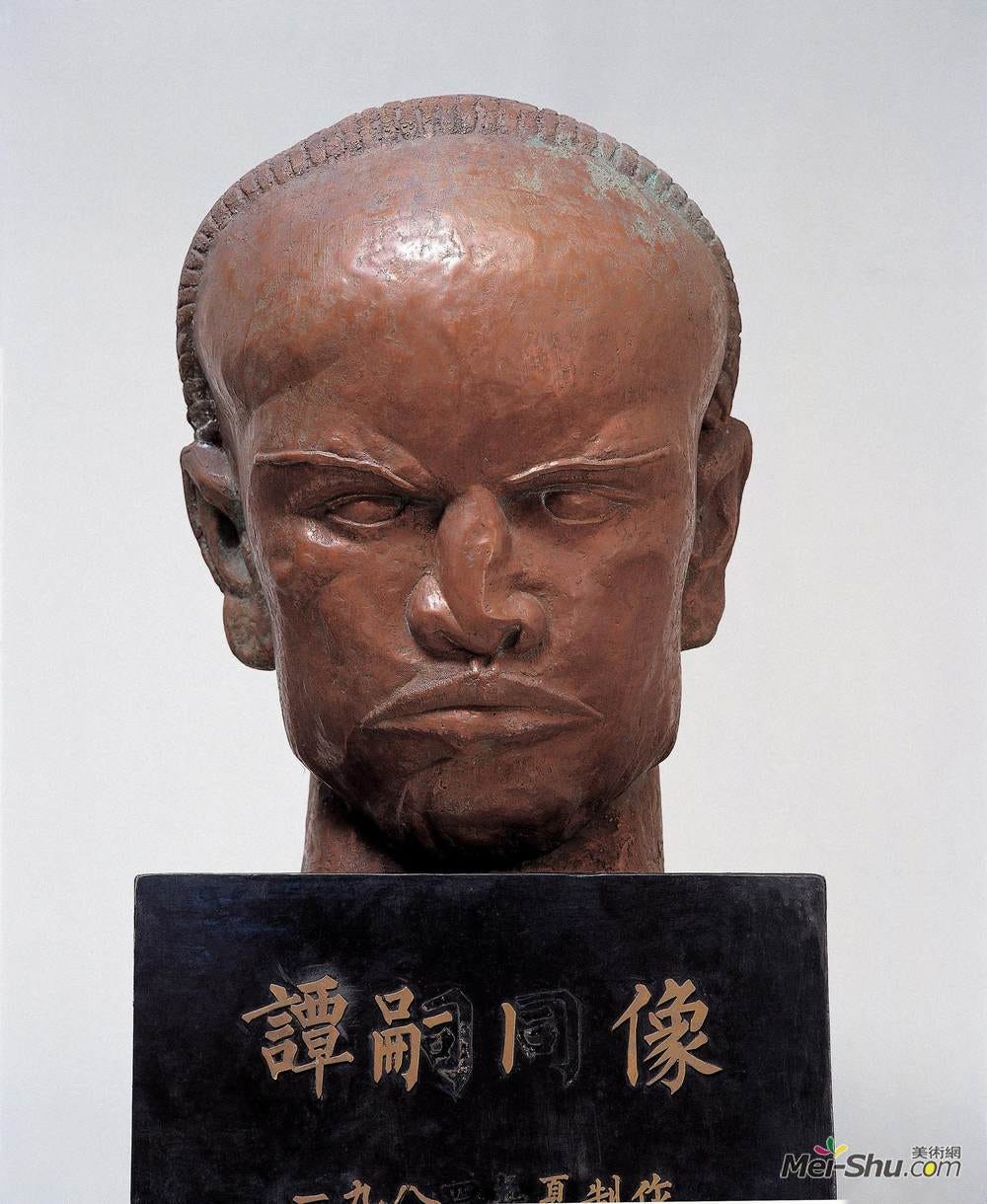
When people now walk through Liuyang, they may see a memorial hall for Tan Sitong, look up at his statue, and hear guides speak about his essays and poems. Many call him a pioneer of Reform, one of the “Six Gentlemen of 1898,” a hero of modern Chinese history.
In the autumn of 1898, though, most people called him a “criminal of the throne” and a “rebel.”
The person is the same. What changed with time was the name. What lay between?
The difference lies in a country slowly learning to tell who was defending its future and who clung to the old order. It lies in generation after generation slowly re-reading that patch of blood at Caishikou.
Today, some people are still in prison. Some are on the road in exile. Some are waiting in detention centers for their sentences. The words used in the world outside to name them are not kind. Some call them “troublemakers.” Some say they are “tools of foreign forces.” Some complain that they “look for trouble when there is none.”
If the scale of time is stretched out longer, who can say that the labels in the textbooks a hundred years from now will not become two very different characters.
There are two kinds of fame. One is for the moment—for the newspapers, for memorials in official reports, for the smiles of superiors. That kind comes fast and fades fast. A little wind scatters it. The other seeks only the fame that comes after a hundred years. By then, the grass will have grown and died in many rounds. The old dynasty will have fallen. People will look back at history and see whose bones truly held their shape.
Tan Sitong did not live to see the day when people called him a pioneer. In life he only resolved to walk to the scaffold. In death he came home in a coffin his father had dragged back.
Nor did Tan Jixun live to see his son vindicated and commemorated. At seventy-two, he merely clenched his teeth and knelt in the yellow dirt of Hebei, guarding a coffin for his son.
History later wrote their story into its books. The ink looks pale on the page, but it cannot muffle the sobbing in that study at night, cannot stop the cold wind at Caishikou, cannot drown out the accusations that followed the coffin down the official road.
X
In the last days of a dynasty, some die on the execution ground, some die in their beds. The first leave behind a good name. The second leave behind one line in a genealogy.
People today read under electric lights. Most have never seen blood on an execution ground with their own eyes. But they often see iron doors, bars, and fences in the news. Behind that metal, someone has lost freedom for a sentence spoken, an article written, a single photograph.
Onlookers still fall into two groups. Some shake their heads and say, “Why bother? It only brings trouble to stand up for others.” Others think of Tan Sitong more than a century ago and of that couplet carved on stone: “Let abuse sweep the world and every land, it is still only curses; / As for vindication in a thousand autumns and hundred generations, no one can yet know.”
History will never tell anyone what to choose. It only lays out, long afterward, the results of every choice.
By then, people will speak certain names and call them heroes. They will also speak of others and say that, back then, those people knew everything and pretended to know nothing.
On the slope outside Liuyang, Tan Sitong’s grave has seen many storms. The characters on the stone have been washed pale by rain. Grass grows up again and again and is pulled up again and again.
The mountain wind that blows over the grave is like the wind that once blew along the official road. This time, though, there is something more in it—a faint sound of a country moving, bit by bit, from ignorance toward awareness.
Some passersby stop at the grave and say his name. Some also think of his father. When they reach that thought, they understand that laying out the dead has never been only for the dead. It also points out a way for the living.
Thankyou for this powerful essay. So well-told, building in momentum. How brave was Tan Jixun, aged over 70. How brave can we be??
Never forget those who came before to grant us the bit of peace we have today. Thank you for the lament and eulogy of the steel clarity and resolve of Tan Sitong, honored and respected by an old man, his father. The pastness of the past bears tombstones engraved to keep the present alive every day, even as many today draw the curtains closed on windows to keep out the cold and the damp and dark thoughts during a rainy day.