
Language Alchemy
— The Narrative Space and Aesthetic Style of Ge Fei’s Novel

Ren Jingjing (任晶晶)
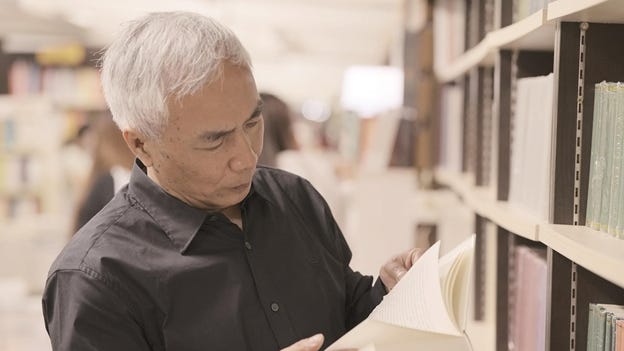
Ge Fei (格非) is called “a writer’s writer,” the highest form of esteem among peers: writing serves literature first, and only then topic and era. With his early avant-garde experiments he jolted the literary scene, and later his “Jiangnan Trilogy” demonstrated that he could also command large architectures and historical narration. In the four books Adrift (迷舟), Ring-Flower (戒指花), The Brocade Zither (锦瑟), and The Alchemy of Time (时间的炼金术), he pushes to an extreme a more intricate, more inward method: organizing the novel by “narrative space” rather than “narrative world.” By “narrative space” I mean not a geographical setting but a literary milieu composed of omission, refraction, pause, and echo—the narrator does not hurry to finish the story but suspends meaning in the seams of syntax, behind sequences in time, and on the surface of things, so that readers, advancing and retreating, complete the blanks the text leaves. For more than thirty years, contemporary Chinese narration has largely been driven by big themes, heavy flavors, and hard plots; Ge Fei does the opposite, liberating narrative from the tyranny of “brute fact” and restoring to language its sensitivity and dignity before ambiguity, paradox, illusion, and the not-yet-decided. In this sense he is called a “forerunner,” and is also among the first Chinese writers shortlisted for the National Book Award in the United States; his fiction proves that the delicate craftsmanship of Chinese narration can converse with the most exacting traditions of world literature.
These four books are not a set of parallel topics, but four experimental plots of narrative that mirror and refract one another. Adrift takes “lostness” as its axis, and its strategy is precisely “to lose”: time does not advance by causality but coils in layers through the backwash of memory and the swapping of angles; relations among characters are not explained handbook-style but are obliquely linked by recurring details—river channels, threads of rain, a boat awning, a mirror’s face; the narrated is often also the observer, and point of view shuttles between first and third person, like ripples dragging the bank’s reflection—readers are compelled to revise “what happened” into “why it is seen this way.” Ring-Flower places a more concrete image at the center: rings imply cycles, vows, and constraint; flowers imply blossoming, decay, and chance encounter; the two combine into a sense of time—we think we move forward, yet we circle on a ring; we think we possess, yet are in fact ensnared by the object. Here Ge Fei displays his “micro-narratology”: he does not push story by turns of plot but by minute semantic shifts—the drift of the same sentence’s meaning in different ears, the change of light on the same frame of scenery at different moments—quietly deflecting his characters’ fates. The Brocade Zither is the most obvious classical intertext: it turns Li Shangyin’s (李商隐) famously ambiguous poem into the tuner of novelistic time. The book does not “translate” the poem into plot; it takes the poem’s syntax and beat as a hidden skeleton: entrances and exits of characters fall like stanza breaks, and the narrative’s forward motion gleams like light refracted through a vehicle of metaphor. Readers often think they have understood something, only to find in the next section that the meaning reverses—this is not coyness, but the novel making “understanding” itself the subject: understanding as the art of misunderstanding, intimacy as the craft of misreading. The Alchemy of Time appears to be a mix of essays, poetics, and fictional fragments, yet it develops the narrative credos of the first three: time is not a backdrop but the sole reagent; experience is raw ore, language the crucible, narration the alchemy—it burns away excess and cant, leaving small metallic ingots fit for contemplation. Taken together, the four show that Ge Fei’s ambition has never been to “tell a big story,” but to repair a higher order of reading relation: the writer no longer “tells,” but “co-composes” with the reader.
If we set China’s prominent contemporary writers side by side, we see more clearly Ge Fei’s distinct method and climate. Mo Yan (莫言) writes a grand chorus of “body—land—history,” with dense, lush language, carnivalesque exaggeration, and the feel of the flesh; through the hyperbole of folk narrative he churns up historical pain, and his novels surge on the plenitude of life force. Yu Hua (余华) constructs parable by clean syntax and extreme situations—early work like On the Road at Eighteen carries an avant-garde edge; later books such as To Live and Chronicle of a Blood Merchant ride the waves with coolness and restraint, using a simple person and a steady structure. Chen Zhongshi (陈忠实) and Jia Pingwa (贾平凹) pursue another path: one, with White Deer Plain, shapes the framework of modern national history; the other, with Ruined City and Qin Opera, opens a deep well of northwestern folk culture. Both excel at using locality and dialect to bear a vast narrative. Compared to them, Ge Fei’s intention to “de-regionalize” is more evident: he certainly has the tint of the Jiangnan south, yet transforms it into a “narrative climate”—not scenery but grammar; he relies not on folk legend or heaps of historical stuff, but on language’s refraction, on the hesitation of perception, on differences of angle in looking to generate meaning. Mo Yan stretches to the limit along the axis of “more”; Ge Fei refines and sets along the axis of “less.” Yu Hua emphasizes ethical propositions and turns of fate; Ge Fei emphasizes cognitive predicaments and semantic equivocity. Chen Zhongshi and Jia Pingwa are skillful at the structures of “crowd—clan—custom”; Ge Fei prefers the labyrinth of “individual—perception—dislocation.” In style: Mo Yan is hot, Yu Hua cool, Jia Pingwa thick, Chen Zhongshi upright; Ge Fei is cool without stiffness, thin yet bony—sentences like worked jade, their surfaces warm, edges tucked within.
In character-making Ge Fei also uses tactics unlike mainstream realism. Rarely does he advance a figure by the path “temperament—motive—action”; instead he draws indirectly through “angle—posture—thing”: how long one lingers before a pane of glass, a spell of gazing at water-light, a hesitation when passing a cigarette—often stronger than a paragraph of psychological analysis. He lets a character’s “inability to say” and “inability to say clearly” become part of the character. That accords with the truth of modern experience—we constantly misunderstand others and ourselves—and gives the novel a distinctive tension: reading the person in the blank. Women in his work are often written as “unfaceable centers”: not projections for male writers but mirrors that send the narrator’s line of sight back on itself. They often have no complete biography yet possess a light intense enough to overpower narration. This differs markedly from Jia Pingwa’s dialect-textured women and Mo Yan’s women bursting with life force; it loosens gender from social role and folds it into an experiment in “how seeing is possible.”
Nor are Ge Fei’s stories propelled by dramatic beats and devices of suspense; they resemble shifts of musical mode. The narrator changes key within similar scenes: day and dusk, sun and rain, near and far, and recurring objects—window, mirror, boat, bridge, rain, zither—draw different emotional strings. The reader comes to see that what we call “plot” is an image generated in the mind by these modal changes layered together, not a “set piece” flaunted on the page. This is not formalist scaffolding but a candid reply to the “un-narratability” of modern experience: our lives are composed more by light differences and small skewings than by thunderclap drama and interchangeable climaxes. Hence his fiction invites slow reading and rereading: first to “see clearly,” second to “understand,” third to “see what cannot be seen.”
At the level of language he carries on a most exacting Chinese lineage—tuning tone with literary sensibility, conjuring atmosphere by rhetoric. In syntax he favors medium and short sentences with pivots, insertions, and cadences so that narration breathes; in diction he prefers words that trigger sight and touch at once—“damp,” “greasy,” “dull,” “late”—giving texture to the relation between time and things; in trope he reins in metaphor to “the thing itself,” avoids excess symbolization, and lets the image sway between meaning and material. This feel for “reserve and measure” contrasts clearly with Jia Pingwa’s dialectal abundance, Mo Yan’s explosive color, and Yu Hua’s minimalist restraint. From Lu Xun (鲁迅) onward he draws a clear vein from “the elegance within the vernacular,” and quietly aligns with modernist traditions such as Borges (博尔赫斯), Robbe-Grillet (罗伯-格里耶), and Calvino (卡尔维诺): he believes the novel is first a tool for knowing, not a sociological report or an outlet for emotion.
More crucially, Ge Fei’s “narrative space” is not merely a technique but an aesthetic ethic. It resists sealing the complexity of human affairs with determinate answers and makes “the unsayable in full” a conscious stance; it asks readers to assume responsibility—to conspire with the text rather than passively receive it. At one time such writing in China was labeled “cold” and “difficult,” yet it is precisely this difficulty that rescues Chinese fiction from the tug of slogans and emotion and restores language itself as a vessel for thought. Adrift, Ring-Flower, and The Brocade Zither are like three small violins; The Alchemy of Time is a hidden score. Together they compose a Ge Fei world: it does not scream, but it resounds long in the reader’s mind. This is also why, when his work is translated into English, it finds resonance among non-Chinese readers and juries—not a triumph of exotic subject matter, but the cross-cultural legibility of method. Language’s blanks, time’s returns, and the ethics of looking all have readers in any mature literary community.
From a longer view, Ge Fei’s contribution lies not in “opening some topic” but in “repairing a capacity.” He teaches Chinese fiction again to believe: ambiguity is not weakness but a weapon against crude explanation; omission is not laziness but a pact to let meaning be completed at the reader’s end; slowness is not conservatism but the proper speed for complex experience. He lowers the “entropy” between experience and language so that every sentence is like a small metallic granule catching light in time—hence the metaphor of “alchemy.” To place him alongside Mo Yan, Yu Hua, Chen Zhongshi, and Jia Pingwa is not to rank winners and losers, but to see the many possible roads of Chinese fiction: some travel by force and the body, some by ethics and parable, some by history and terroir; Ge Fei travels by language and perception. The road looks narrow yet reaches far, because it preserves the thing literature cannot be without: using language to make the world with fine hands.
In an age occupied by instant narration, Ge Fei’s four books stand like four small, hard nodes reminding us that the novel can still be a slow craft: not manufacturing consensus but providing a site for co-reading; not manufacturing certainty but preserving complexity; not manufacturing excitement but training sensitivity. “A writer’s writer” is not a coterie taste meant for peers; it resets literature’s internal standards—when a writer can still make language open a new angle and restore dignity to reading, he naturally crosses borders into the prize lists of another linguistic community. Chinese literature needs such writers, and even more, such readers. After finishing Adrift, Ring-Flower, The Brocade Zither, and The Alchemy of Time, one finds it hard to demand that a novel “just tell a rousing tale” by old habit. You will accept another set of demands: sentences must be sturdy, the angle clean, the story reserved, time echoing. The “narrative space” these four volumes build is one of the most scarce public assets of contemporary Chinese fiction.